Global tourism just posted a record 1.52 billion* international arrivals in 2025 after a decade of pandemics, wars, and climate shocks.
Tourism Economics, an Oxford Economics company, analyzed 85 major tourism crises over 25 years to understand how. The findings, developed with TOURISE, offer destinations and investors an evidence-based way to think about resilience: not as a response to crisis, but as a strategic capability that shapes long-term competitiveness.
The Pattern Behind Recovery
Tourism’s recovery from disruption isn’t a story of one lucky rebound. The data shows a consistent pattern: destinations that invest in preparedness before disruption hits recover faster, and by a wide margin.
Key Findings
- Recovery is accelerating. Average recovery periods have fallen from roughly 24 months in the early 2000s to 10–12 months today.
- Response shapes recovery. Destinations that restore capacity quickly, communicate effectively, and demonstrate safety typically recover 1.5 times faster than average.
- Confidence now moves faster than people. In 2025, viral rumors of a megaquake, with no scientific basis, drove booking declines of up to 50% from some East Asian source markets. Managing misinformation and perception has become as operationally critical as managing the disruption itself.
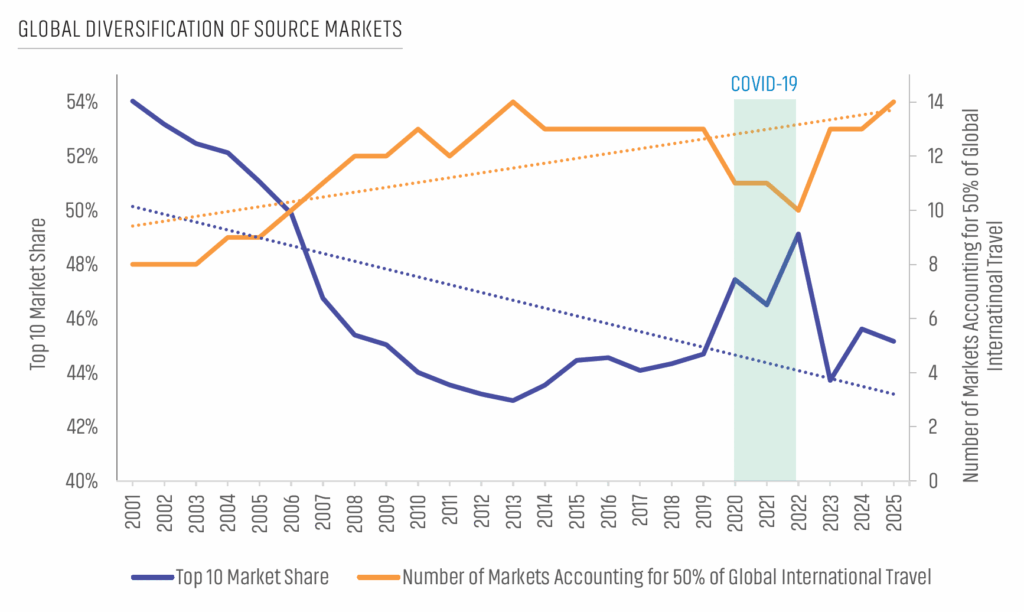
- Diversification is the strongest insurance policy. The share of global travel from the ten largest source markets fell from 54% in 2001 to 45% in 2025, while the number of markets needed to account for half of international travel grew from eight to 14.
- Tourism absorbs shocks better than it used to. Even under an escalation scenario, the report’s modeling projects only about a 1% decline in global travel in 2026, as travelers adapt and substitute destinations rather than cancel trips outright.
- Resilience is a competitive advantage. Destinations that preserve capacity, diversify demand, maintain trust, and invest continuously in preparedness consistently recover faster than those that do not.